Photo or Signature? Choosing the Right Proof of Delivery for Your Business
August 31, 2026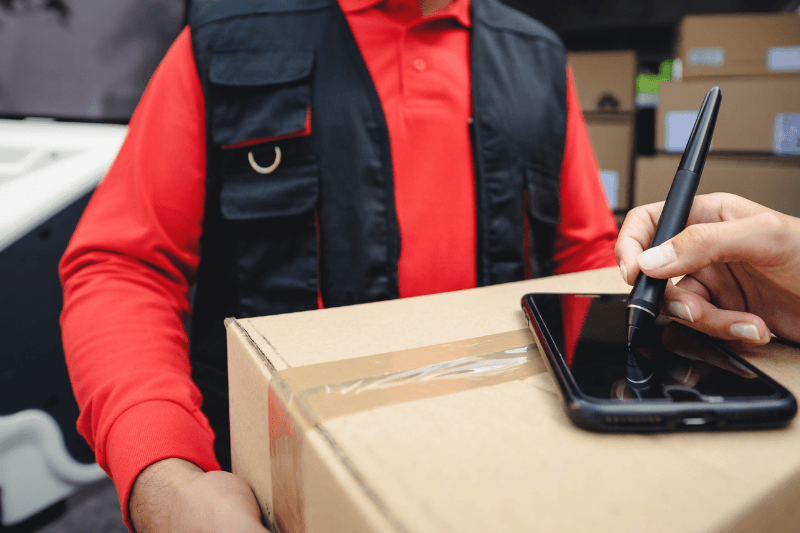
The MyRoute app now captures both a photo and a signature at the point of delivery, alongside the existing status and notes fields. Having both options is useful, but it raises a real question most delivery businesses haven’t had to think through before: which one actually protects you when a delivery gets disputed, and does it matter which you use?
What Each One Actually Proves
A photo proves the package was left somewhere, on a doorstep, at a reception desk, in a specific location. It’s fast, requires nothing from the customer, and works even when nobody’s home. What it doesn’t prove is that the right person received it, or that they agreed the delivery was complete and correct.
A signature as POD proves that someone specific acknowledged receiving the delivery. It requires a person to be present and to actively confirm, which makes it slower and occasionally impossible to collect, but it closes a gap a photo can’t: it ties the delivery to a person, not just a location.
Where this Actually Matters
High-Value or Regulated Goods
Anything where “it was left on the porch” isn’t good enough, prescription medications, controlled substances, expensive electronics, legal or financial documents, benefits from a signature specifically. A photo of a package on a step doesn’t establish who took responsibility for it once it was there.
Contactless or Unattended Deliveries
Food, groceries, and most e-commerce packages are routinely left without anyone present. A signature isn’t realistic here, a photo is the only practical option, and it’s also the one customers expect, nobody wants to wait at the door for a grocery delivery.
Business-to-Business Deliveries
Deliveries to a business address, a restaurant receiving a supply order, a clinic receiving medical supplies, a retail store receiving inventory, are a good case for both. A signature identifies who at the business accepted it, and a photo documents the condition and quantity at the moment of handoff, useful if a dispute later involves how many units arrived or what condition they were in.
Recurring Customers vs. One-off Deliveries
For a regular customer on a standing route, a photo is often enough, the ongoing relationship and delivery history already carry some of the trust a signature would otherwise establish. For a first-time delivery or a higher-value one-off order, a signature adds a layer of accountability that a photo alone doesn’t.
The Real Cost of Getting this Wrong
The expensive failure mode isn’t choosing the “wrong” one, it’s not capturing anything at all, or defaulting to whichever is fastest regardless of what’s actually being delivered. A missing proof of delivery on a disputed high-value order means the business absorbs the cost of a claim it may have actually fulfilled correctly. The few extra seconds a signature takes are cheap insurance exactly in the cases where the delivery itself carries real risk.
A Simple Way to Decide
- Left unattended, low dispute risk: photo is enough
- Someone will be present, moderate value: photo, with signature as a quick add if the recipient is right there
- High value, regulated, or first-time delivery: capture both
FAQ about POD
Do I have to choose one or can drivers capture both?
Both can be captured on the same delivery. The choice isn’t which feature to enable, it’s building a habit or a simple policy for which deliveries warrant which level of proof.
Does a signature slow drivers down significantly?
It adds a short pause compared to a photo, since it requires the recipient to be present and to actively sign. For unattended or low-risk deliveries, that tradeoff usually isn’t worth it. For higher-value or regulated deliveries, the extra few seconds are generally worth the stronger proof.
Is a photo alone ever legally sufficient?
It depends on the industry and what’s being delivered. For most retail and food deliveries, a photo showing the item was left as instructed is generally sufficient. For regulated goods like prescription medications, check the specific requirements that apply, a signature is often expected or required in those cases.