How do you Plan Delivery Routes During Thanksgiving Week?
November 18, 2026
Quick answer: To plan delivery routes during Thanksgiving week, schedule your heaviest delivery days for Monday and the morning hours, avoid the road between noon and 6 p.m. on Tuesday and Wednesday, close or run a reduced schedule on Thanksgiving Day, and plan for a midday traffic spike on Black Friday. In 2026, fuel prices are higher than at any previous Thanksgiving, so cutting unnecessary miles with optimized routes matters more than usual.
Thanksgiving week squeezes a normal delivery workload into fewer working days, on roads shared with millions of holiday drivers. This guide covers when traffic usually peaks, how this year’s fuel prices change the planning, and practical steps any delivery business can take to keep routes on time.
Why is Thanksgiving Week so Hard for Delivery Routes?
Three pressures hit delivery businesses during the same week.
First, there is more traffic. AAA projects 81.5 million Americans will travel at least 50 miles from home between Tuesday, November 24 and Monday, November 30, 2026, and about 72.9 million of them are expected to travel by car. Those trips share highways and local roads with your vans and trucks.
Second, there are fewer working days. Many businesses close on Thanksgiving Day, and customers often want orders delivered before the holiday, not after. That pushes a full week of deliveries into Monday, Tuesday, and Wednesday.
Third, demand rises. Holiday catering, groceries, flowers, gifts, and retail restocking for Black Friday all add stops during the very days when roads are busiest.
When is Traffic Worst During Thanksgiving Week?
Google published its 2026 Google Maps holiday traffic trends, based on historical driving patterns. They describe general road traffic rather than delivery-specific data, but they are a useful planning guide:
- Tuesday before Thanksgiving: Drive before 1 p.m. or after 6 p.m. Avoid 3 to 5 p.m.
- Wednesday before Thanksgiving: Drive before 9 a.m. or after 6 p.m. Avoid noon to 3 p.m.
- Thanksgiving Day: Roads are usually light, especially after noon.
- Black Friday: Expect the heaviest traffic from 11 a.m. to 3 p.m.
- Sunday return trips: Traffic is lighter before noon or after 3 p.m.
The takeaway for delivery teams: mornings are your best window on Tuesday and Wednesday, and Wednesday afternoon is the hardest time of the week to keep a route on schedule.
Local patterns vary. Routes near airports, shopping centers, and major interstates will usually see heavier congestion than residential areas.
How do High Fuel Prices Affect Holiday Delivery Costs?
Fuel is a bigger factor this year. AAA reported that regular gas averaged $3.82 a gallon in mid-November 2026, compared with $3.08 a year earlier. If prices hold, Thanksgiving Day gas will be the most expensive on record, beating the previous high of $3.58 in 2022.
For a delivery business, every extra mile costs more fuel, more driver time, and more wear on the vehicle. Holiday traffic adds to that cost through idling and slow-moving stretches. A route that backtracks across town or crosses the same congested road twice wastes more money this week than it would in a quiet week in spring.
Shorter routes don’t remove the impact of high fuel prices, but they are among the few cost factors a delivery business fully controls.
We’ve mentioned the best apps and tools for comparing gas prices, this blog can be useful to finding the cheapest gas prices near you.
How to Plan Delivery Routes for Thanksgiving Week: 7 Practical Tips
1. Front-load the week. Move as many deliveries as possible to Monday and Tuesday morning. Tell customers early that holiday-week orders have earlier cutoffs.
2. Start routes earlier on Tuesday and Wednesday. An early start lets drivers finish most stops before the midday and afternoon peaks. On Wednesday, Google’s data shows traffic building from noon.
3. Group stops by area. Assign each driver a defined territory so they aren’t crossing busy roads to reach scattered stops. This cuts both miles and the number of congested intersections a driver passes through.
4. Add realistic service time and buffers. Holiday stops often take longer: larger orders, more packages per stop, busy loading areas, and customers who aren’t home. Set a slightly longer service time per stop this week so arrival estimates stay accurate.
5. Cap route length. Long routes are more likely to run into afternoon traffic. Setting a maximum route duration or stop count per driver keeps routes finishing before the worst hours.
6. Plan Black Friday around the midday peak. If you deliver on Friday, schedule stops near shopping centers early in the morning or after 3 p.m., and keep midday stops in residential areas.
7. Communicate with customers. Arrival notifications cut down on failed deliveries and repeat trips, and repeat trips cost far more when fuel prices and traffic are both high.
How Route Optimization Software Helps During Peak Weeks
Planning routes by hand works when a business has a handful of stops. During holiday weeks, when stop counts rise and the delivery window shrinks, manual planning often leads to longer routes and missed time estimates.
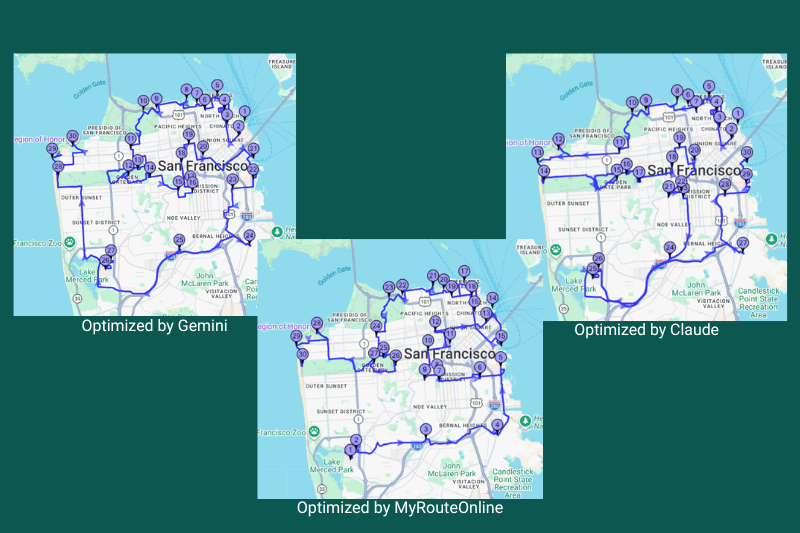
Route optimization software finds the most efficient order for a set of stops, based on distance or drive time. In MyRouteOnline route planner, for example, dispatchers can import addresses from an Excel file, set a service time for each stop, split deliveries into multiple routes based on a maximum route duration or number of stops, and assign territories to balance workload across drivers. Drivers receive their routes in the MyRoute app and navigate with Google Maps or Waze, which show real-time traffic conditions on the road.
After the week ends, comparing planned and actual route times shows where holiday traffic caused delays. That makes planning for the next peak, the weeks before Christmas, more accurate.
Thanksgiving Week Delivery Schedule at a Glance
| Day | Delivery planning approach |
| Monday | Heaviest delivery day; handle as much of the week’s volume as possible |
| Tuesday | Morning routes; avoid 3 to 5 p.m. |
| Wednesday | Early start, finish before noon if possible; avoid noon to 3 p.m. |
| Thanksgiving Day | Closed or very limited; roads are lighter after noon |
| Black Friday | Early morning and after 3 p.m.; avoid 11 a.m. to 3 p.m. near shopping areas |
| Weekend | Lighter routes; Sunday traffic is lighter before noon or after 3 p.m. |
Plan Ahead for a Smoother Holiday Week
Thanksgiving week rewards early planning. When delivery volume moves to the start of the week, routes run in the morning, and every route is planned to cut unnecessary miles, drivers spend less time in holiday traffic and less money on fuel. The same approach carries over to the rest of the holiday season.
FAQ about ThanksGiving Week’s Deliveries
What is the worst day for deliveries during Thanksgiving week?
Wednesday, the day before Thanksgiving, is usually the hardest. Google Maps trends show heavy traffic from noon to 3 p.m., with traffic lighter only before 9 a.m. or after 6 p.m.
Should delivery businesses operate on Thanksgiving Day?
It depends on the business and its customers. Roads are usually light on Thanksgiving Day, but most commercial customers are closed. Businesses that do deliver, such as food or catering services, often find that morning and early afternoon runs move smoothly.
What is the best time to make deliveries during Thanksgiving week?
Mornings on Monday and Tuesday are generally the best window. Early morning is also the best time on Wednesday and Black Friday, before traffic builds.
How can I reduce fuel costs on delivery routes during the holidays?
Plan routes that remove backtracking, group stops by area, avoid peak traffic hours, and reduce failed deliveries by notifying customers before arrival. Route optimization software can do the stop sequencing automatically.
How many people travel for Thanksgiving in 2026?
AAA projects 81.5 million Americans will travel at least 50 miles from home between November 24 and November 30, 2026, with about 72.9 million traveling by car.